
For most artists, success is imagined as the finish line—a moment when years of struggle finally give way to confidence, satisfaction, and creative freedom. Frank Capra expected nothing less. Yet after It Happened One Night (1934) became one of Hollywood’s greatest triumphs, he discovered something far more unsettling: success itself could become a source of anxiety.
Rather than liberating him, the film’s extraordinary acclaim left Capra emotionally adrift. His experience illustrates a paradox shared by many highly accomplished people: sometimes achieving your greatest ambition only magnifies the insecurities that drove you there in the first place.
The Film That Changed Everything
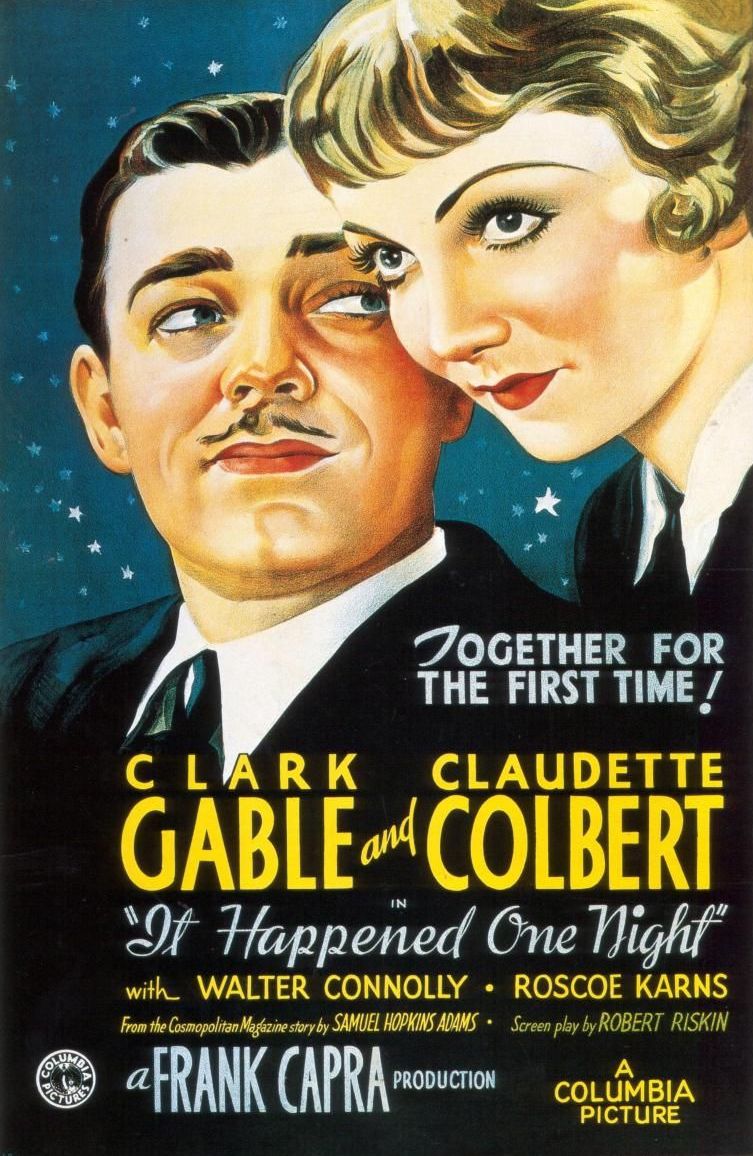
It Happened One Night was a phenomenon. The romantic comedy captivated audiences, transformed the careers of Clark Gable and Claudette Colbert, and became the first film to win all five major Academy Awards: Best Picture, Best Director, Best Actor, Best Actress, and Best Adapted Screenplay.
For Capra, who had spent years fighting for recognition within Hollywood, it represented the validation he had long pursued. Yet instead of bringing peace of mind, the film created an entirely new psychological burden.
Biographer Joseph McBride borrows Tennessee Williams’s phrase “the catastrophe of success” to describe Capra’s state after the film’s release. Success did not answer his doubts—it amplified them.
When Recognition Isn’t Enough
Despite receiving Hollywood’s highest honors, Capra reportedly struggled to understand why It Happened One Night had resonated so profoundly with audiences.
Rather than embracing the praise, he increasingly questioned whether he deserved it.
Winning the Academy Award failed to provide the reassurance he had expected. Instead, every future project became measured against an almost impossible benchmark. If this had been his masterpiece, what could possibly come next?
The pressure became creatively paralyzing. Instead of feeling liberated by success, Capra worried that his career had already reached its highest point and that every subsequent film would inevitably disappoint.
The Burden of Being a Genius
Capra’s psychological struggle extended beyond fear of failure.
Success reportedly intensified a lifelong desire to vindicate himself before relatives who had doubted his ambitions. Recognition became more than professional achievement—it became proof of personal worth.
Yet the more celebrated he became, the more fragile that sense of worth appeared.
One issue haunted him for decades: how much of It Happened One Night truly belonged to him?
Because filmmaking is inherently collaborative, questions persisted about the contribution of screenwriter Robert Riskin. Capra increasingly emphasized his own creative role, reflecting an apparent need to believe that the achievement was fundamentally his.
This tension highlights a dilemma familiar to many directors. Cinema is perhaps the most collaborative of all artistic mediums, yet audiences often elevate directors as singular creative visionaries. For Capra, that contradiction became deeply personal.
An Early Portrait of Impostor Syndrome
Today, psychologists might describe Capra’s experience as impostor syndrome—the persistent belief that one’s accomplishments result more from luck than genuine ability.
Although the term did not exist during Capra’s lifetime, many biographers argue that it captures his emotional state remarkably well.
Several lifelong insecurities likely reinforced these feelings:
- His upbringing as the son of poor Sicilian immigrants.
- Guilt over achieving a level of success far beyond his family’s circumstances.
- Abandoned dreams of becoming a scientist or writer.
- Doubts about whether directing films constituted meaningful artistic work.
- An enduring desire for approval from his emotionally distant mother.
Rather than disappearing after success arrived, these insecurities became more visible.
The higher Capra climbed, the further he felt he had to fall.
Success and Identity
Perhaps the saddest aspect of Capra’s later reflections is the sense of emotional distance he developed from his own work.
Late in life, he remarked that some of his greatest films no longer even felt as though they belonged to him.
For someone who had devoted decades to proving himself, this is a striking confession. The achievement he had pursued with relentless determination ultimately became something he struggled to claim as his own.
His story reveals an uncomfortable truth about ambition: external success does not automatically produce internal security.
The Lasting Lesson
Frank Capra’s career is often celebrated as one of Hollywood’s greatest success stories. Yet behind the Academy Awards, box-office triumphs, and enduring classics stood a man wrestling with profound self-doubt.
It Happened One Night secured his place in cinematic history, but it also became the standard against which he measured every future accomplishment—and himself.
Capra’s experience remains remarkably relevant today. Whether in filmmaking, business, academia, or the arts, many high achievers discover that reaching the summit does not silence insecurity. Sometimes it merely changes its form.
His “catastrophe of success” reminds us that the greatest battles are often not fought against failure, but against the fear that success itself may never be enough.
꧁ ✧꧂
It Happened One Night episode is now live! Listen to it here:



Leave a Reply